
Dredge and Moss Machine – suffice it to say it has been a rough season so far for vegetation blooms and equipment failures. The dredge was a pain to get up and running due to pipe connectors, followed by the cutting bar cable unraveling and as I write the pump seized due to some material clog. The Moss Machine operated last week for part of a day and then the actuator arms to the spinning drum broke. Both will be back up and running as soon as repairs are completed.
I will use this opportunity to point out that if objects blow or drop into the lake and are not recovered, they do play havoc with our equipment and lead to repairs, down time and longer timelines for completing the work. Please take action to protect the lake from Cans, Bottles, Mats, Chairs, Umbrellas, etc. that blow into the lake.
Dredge Pipe Protection – I’m still shocked that any captain would attempt to cross over the dredge pipe, especially right off the back of the Dredge Machine, but yet I witnessed it first-hand. I’m sorry to be rude, that is a duh moment. Despite the potential damage to your lower unit and hull, the dredge pipe especially the section extending from the rear of the dredge is very expensive. If you damage the pipe and we have to repair or replace, you are costing the Association thousands of dollars and a delay in operations. Remember we all are the Association and it comes out of your pocketbook when you damage the dredge pipe.
Water Quality – prior to the dredge running in Quantrill and Waterfall we had Quantrill and Waterfall coves by Solitude Lake Management who conducted the test and will be supporting or Missouri Department of Natural Resources requires dredge report tests. Suffice it to say we were not surprised to see that Phosphorus and Orthophosphate levels were High by double and over 5 times respectively. Orthophosphate is the easily consumed by aquatic vegetation and the largest reason besides our clear water for the massive Naiad and Duckweed blooms. Also, our water is hard, meaning a lot of minerals in the water. This is why if you are in the water a lot you may have itchy or dry skin afterwards.
Aquatic Vegetation – Summer Heat Brings a Natural Change to Lake Vegetation – with recent daytime temperatures in the 90s and over an inch of rainfall, many property owners are noticing increasing amounts of brown vegetation floating in some of coves and along portions of the shoreline. In most cases, what you’re seeing is not a new problem—it’s part of the natural seasonal cycle of Southern Naiad.
Southern naiad is a submerged aquatic plant that grows rapidly during late spring and early summer. As water temperatures continue to rise, portions of these dense plant beds naturally begin to die back. The decaying vegetation becomes buoyant, rises to the surface, and often collects into floating mats, particularly in shallow coves where water movement is limited. Mix in Duck Weed and yuck!
While these mats may be unsightly and can produce an earthy odor as they decompose, Southern Naiad itself is not toxic. However, many people mistake these brown floating mats for blue-green algae (cyanobacteria). Unlike decaying vegetation, certain blue-green algae blooms can produce toxins that may pose risks to people, pets, and wildlife. Brown, fibrous plant material with visible stems and leaves is typically decomposing vegetation, while blue-green algae usually appears as a paint-like, pea soup, or surface scum. To date we have not seen the blue-green algae around the lake.
As the summer progresses, residents can expect additional dieback in the shallow coves before conditions improve later in the season. Decomposition also consumes dissolved oxygen, which is one reason fish often move from shallow coves into deeper, better-circulated water during periods of prolonged heat.
This seasonal transition highlights the importance of Lake Lotawana’s ongoing watershed management, sediment reduction, stocking of grass carp and aquatic vegetation management efforts. Reducing sediment and excess nutrients help slow the growth of nuisance vegetation and supports a healthier lake for future generations..
Spraying Vegetation – a reminder that spraying any type of herbicide is considered dumping chemicals into the lake and comes with a 15 point citation and 1 year suspension from the lake. Please do not attempt to control aquatic vegetation around your dock with herbicides and please spread the word to your neighbors who you know don’t read the paper. You are really not accomplishing much with store bought chemicals and hurting the fishery in the effort.
Fertilization and Pest Control – as we remind members each year, please limit fertilizer use on your property and avoid using sprays near the water that contain Bifenthrin or Demand CS, which are highly toxic to fish and other aquatic life. A few vendors are approved for work around the lake because they use eco-friendly products that the Association Environmental Committee has reviewed with a Missouri Department of Natural Resources biologist.
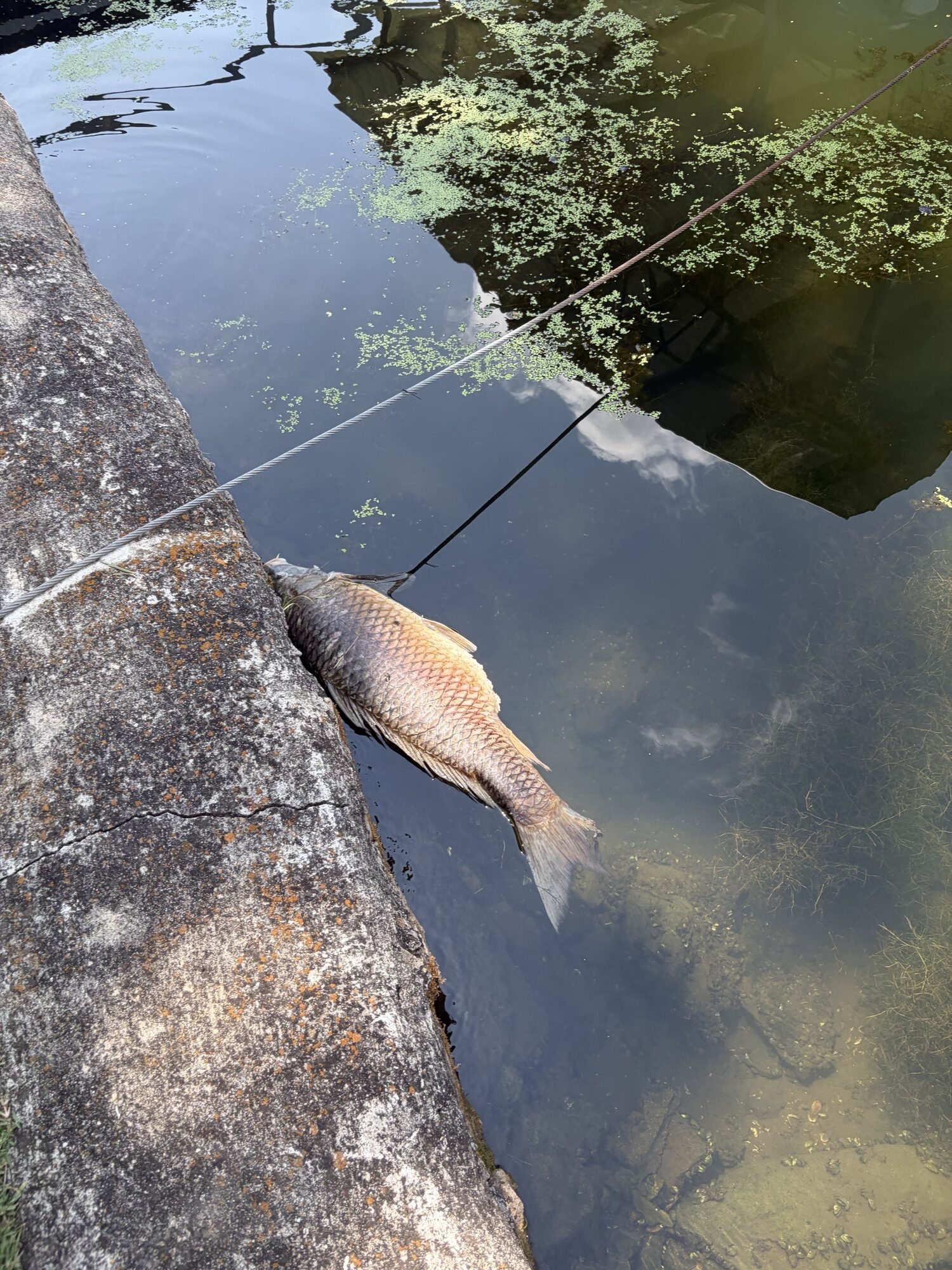
Grass Carp – if you see one of these floating in the lake you are seeing Grass Carp that were stocked years ago and are aging out. They have a 7-9 year life span and eventually grow to a point where they stop eating and die off. Not to worry our newest additions have a long rod of eating ahead of them. We now have 450 newer carp stocked with plans to continue adding in increments until our balance is met
Fireworks Donations – a big thanks to all of you who donated already to the Fireworks fund. This is the first year in quite a while we are short on our goal by $10,000. If you have not yet donated please do it through the link sent in the Association at a Glance email you receive. If you can’t find it in your junk or deleted folder look in your spam folder. To make sure you don’t miss Association News mark the email sender info@regroupcloud.com as safe so you see future editions.
Spire Project – the good news is Spire has completed the main replacement and service line tie ins from the top of O Block hill to the Gate 7 entrance. If not already being done the clean up crew will be filling the road cuts, etc. per the requirements our Road Committee has provided them. The plan is still to complete the east shore resurfacing along this stretch once the new culvert in V block is completed.
Socket Fiber – the boring in of new fiber lines by Socket Fiber out of Columbia, MO has started at Gate 5 and another crew in L Block. The main feed will be coming up from Hwy 50 to the Milton Thompson / Hwy 7 intersection, where it will cross and connect with the lines being installed now. It will take 6-9 months for the overall project, but as the main line connects they will begin offering services where possible.
Bright Speed Fiber – not too far behind will be Bright Speed with their Fiber offering. A lot slower in moving their project along, they will be ramping up still this year according to recent communications.
If you have questions or topics, you would like discussed regarding the Association, please feel free to drop me a note at President@lakelotawana.net.